
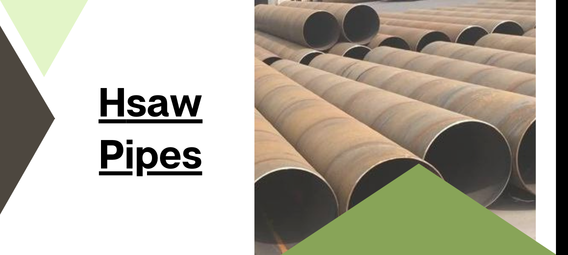
HSAW Pipes and Their Industrial Importance
Steel pipes are the primary method for moving liquids and gases across long distances. While there are many ways to make these pipes, the Helical Submerged Arc Welded (HSAW) method stands out for its unique design. Unlike standard pipes with a straight seam, HSAW pipes use a spiral weld. This method allows manufacturers to create very large pipes from relatively narrow steel coils. As global energy needs grow, the demand for high-pressure, large-diameter pipes has increased. HSAW pipes offer a reliable way to build massive pipelines for oil, gas, and water. Understanding how these pipes are made helps engineers and project managers choose the right materials for their infrastructure.
What Are Helical Submerged Arc Welded (HSAW) Pipes?
HSAW pipes are steel tubes that are made by winding a hot-rolled steel strip into a spiral shape. The edges of the spiral are joined together with a submerged arc welding process. The “helical” part of the name comes from the way the seam wraps around the pipe like a screw thread. Longitudinal Submerged Arc Welded (LSAW) pipes, on the other hand have a single straight seam that runs along the length of the pipe. HSAW pipes usually have to meet strict standards like API 5L or ASTM. HSAW pipes are available in sizes ranging from 20 inches to over 100 inches. The thickness of their walls can vary depending on how much pressure they need to hold. They are a top choice for major civil and industrial projects because they can be of any size
Raw Materials Used in HSAW Pipe Manufacturing
The quality of an HSAW pipe starts with the steel coil. Manufacturers use hot-rolled steel coils, often referred to as “skelp.” These coils must meet specific chemical and mechanical standards to ensure they can handle high pressure. Engineers look at the carbon content, yield strength, and toughness of the steel. If the raw material is poor, the final pipe will fail during testing. Quality control teams check every coil before it enters the production line. They ensure the steel complies with international grades like X70 or X80. Using the right steel prevents cracks and corrosion during the pipe’s long service life.
Step-by-Step Manufacturing Process of HSAW Pipes
Making an HSAW pipe is a precise engineering task that turns a flat coil into a high-strength cylinder.
1. Steel Coil Preparation
The first step is to unroll the huge steel coil. Workers look for any dents or rust on the surface. After that, a machine mills the edges of the steel strip. This makes a clean, beveled edge that is ready to be welded. The strip also passes through a series of rollers to flatten it. This step of straightening the pipe makes sure that it stays perfectly round during the forming stage.
2. Helical Forming Process
The flat steel moves into the forming machine at a specific angle. This angle determines the final diameter of the pipe. As the steel moves forward, rollers bend it into a spiral shape. This is a continuous process. By changing the entry angle, the factory can make different pipe sizes using the same width of steel. The machine keeps the diameter uniform throughout the entire run.
3. Submerged Arc Welding (SAW)
The welding starts once the spiral shape is made. The “submerged” part means that the welding arc is hidden under a layer of granular flux. This flux keeps the weld safe from the air and prevents sparks. The machine first welds the inside, and then the outside. This welding on both sides makes sure that the steel is fully penetrated. It makes a bond that is often stronger than the metal itself.
4. Weld Seam Finishing
After welding, the pipe moves to the finishing station. Any excess flux is cleaned away. Technicians look at the seam to make sure it is smooth and the right shape. If the weld is too high, it might need to be ground down to meet the standards. This step makes sure that the pipe is strong enough and ready for the next test.
Heat Treatment and Pipe Expansion
Sometimes, the welding process creates internal stress in the steel. To fix this, the pipe may undergo heat treatment. This relaxes the metal and makes it more stable. Many factories also use a mechanical expander. This machine pushes out from inside the pipe to ensure it is perfectly round. Expansion also increases the yield strength of the steel. This makes the pipe better at handling the high pressures found in gas transmission lines.
Quality Control and Testing Procedures
Before leaving the factory every HSAW pipe must pass a number of tough tests. The main way of inspection is through non-destructive testing. Ultrasonic testing (UT) and Radiographic testing (RT) look for small cracks or holes in the weld. Then, the pipe undergoes a hydrostatic test. It is filled with water and pressurised to levels much higher than it will face in the field. Inspectors also check the dimensions to ensure the pipe fits perfectly with others. These steps guarantee that the pipe is safe for use in sensitive environments.
Advantages of HSAW Pipes Over Other Pipe Types
The helical design provides several benefits that make it better than straight-seam pipes for certain jobs.
- Cost efficiency for large diameters: You can make very wide pipes from narrow steel strips. This reduces the cost of raw materials and shipping.
- Better load distribution: The spiral seam makes it easier for the pipe to handle internal pressure. This reduces the chance that the pipe will break when it is under sudden stress.
- High strength and flexibility: The continuous forming process makes the structure strong and flexible. These pipes won’t break even if the ground shifts or there are currents underwater.
- Suitability for long-distance pipelines: Because the process is continuous, factories can produce very long sections. This means fewer welds are needed in the field.
Applications of HSAW Pipes Across Industries
HSAW pipes are versatile and used in many sectors that require moving heavy loads or building large structures.
- Oil and gas transmission: These pipes move crude oil and natural gas across continents. They are designed to stay leak-proof for decades under the ground.
- Water supply and sewage: Cities use large HSAW pipes for main water lines. Their smooth interior helps water flow quickly without losing pressure.
- Structural and piling applications: Many bridges and buildings are primarily made from HSAW steel piles. They are driven deep into the earth to provide a solid base for heavy loads.
- Power plants and offshore projects: They are used in cooling systems for power plants. They also serve as structural parts for offshore oil rigs in the ocean.
Why Understanding the HSAW Pipe Manufacturing Process Matters
From the first coil inspection to the final pressure test, every step in making an HSAW pipe counts. The helical forming and submerged arc welding create a product that is both strong and affordable. Quality control at every stage ensures these pipes can handle the toughest jobs. When you know how they are made, you can see why they are a top choice for modern engineering. Choosing the right pipe ensures safety and saves money over time. Contact Champak Steel today to learn more about our high-quality pipe options for your next project.