
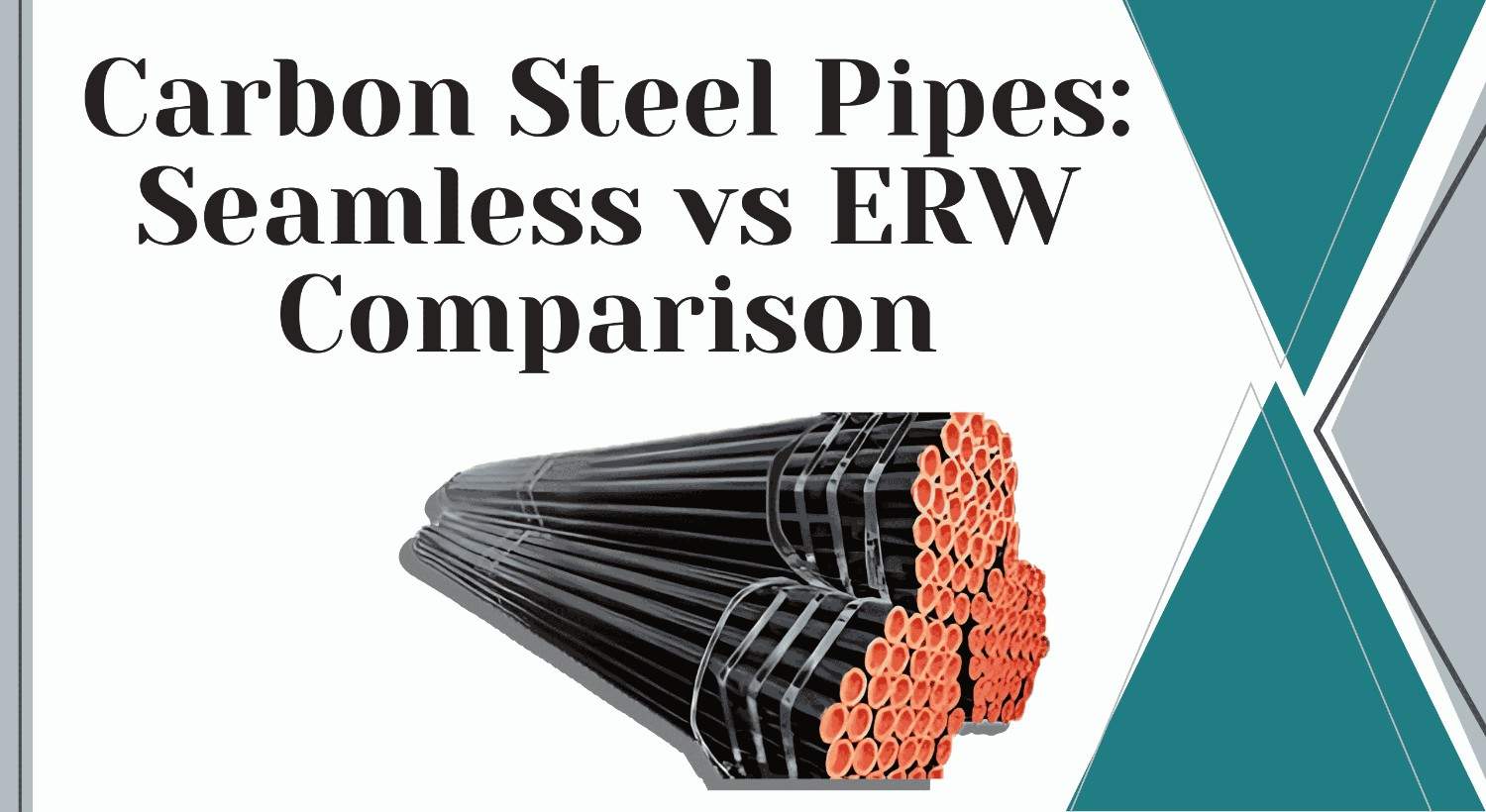
When it comes to industrial piping, Carbon Steel Seamless and ERW (Electric Resistance Welded) pipes are two of the most commonly used types across various sectors. Both types are integral to different applications but have distinct characteristics that set them apart. This article explains what Carbon Steel ERW pipes are, focusing on the electric resistance welding process and their suitability for structural, low-to-medium pressure uses. It also covers Carbon Steel Seamless pipes, which are made without welds, offering superior strength, durability, and resistance to high pressure. The key differences between ERW and Seamless pipes lie in their manufacturing methods, weld seams, strength, precision, cost, and inspection requirements. Understanding these differences is essential for selecting the right pipe for your specific industrial needs.
What is Seamless & ERW Pipe
Carbon Steel Seamless Pipe
A Carbon Steel Seamless Pipe is manufactured by heating and piercing a solid billet of carbon steel to create a hollow tube without any weld seams. This process involves extensive heating and stretching to form the final pipe shape. As there are no welded seams in seamless pipes, they offer superior strength, uniformity, and resistance to high pressure and temperature, making them ideal for critical applications.
Seamless carbon steel pipes are especially suitable for industries like oil & gas, power generation, and chemical processing, where pipes are subjected to high-pressure, high-temperature, or corrosive conditions.
Carbon Steel ERW Pipe
Carbon Steel ERW Pipes are produced through the Electric Resistance Welding (ERW) process. In this process, carbon steel sheets or strips are formed into cylindrical shapes and then welded longitudinally by applying electric resistance to the edges. The heat generated from the electric current bonds the edges of the steel strips together to form a pipe.
The ERW pipe manufacturing process is quicker and less expensive than seamless production, making ERW pipes the preferred choice for many structural and low-to-medium pressure applications. These pipes are often used in projects where cost-effectiveness and strength are essential.

Difference Between Carbon Steel Seamless and ERW Pipes
1. Manufacturing Process
- Seamless Pipes: Made by piercing a solid billet and stretching it into a hollow tube. This process requires more advanced equipment and is more labor-intensive, resulting in a longer production cycle.
- ERW Pipes: Manufactured by rolling a flat strip of carbon steel into a cylindrical shape and welding the edges. This process is faster and more cost-effective than seamless pipe production.
2. Weld Seam
- Seamless Pipes: As the name suggests, seamless pipes have no weld seam, providing better structural integrity and fewer risks of failure due to welding flaws.
- ERW Pipes: These pipes have a welded seam along the length of the pipe. The weld seam must be thoroughly inspected, especially in high-pressure applications, as it can be a potential weak point.
3. Strength and Pressure Resistance
- Seamless Pipes: Known for their superior strength and pressure resistance. The absence of a weld seam makes them more reliable for handling high-pressure and high-temperature conditions, making them ideal for use in industries like oil & gas and chemical processing.
- ERW Pipes: While ERW pipes offer good strength, their weld seam can be a potential weak point under extreme conditions. These pipes are typically used in applications where pressure and temperature are moderate.
4. Cost
- Seamless Pipes: Generally more expensive due to the complex manufacturing process and higher material waste.
- ERW Pipes: More cost-effective due to the faster manufacturing process and lower material wastage. They are the go-to choice for applications that do not demand the high performance of seamless pipes.
5. Precision
- Seamless Pipes: Seamless pipes tend to have slightly more variability in terms of thickness and roundness, especially in longer lengths. However, they still meet rigorous industry standards for critical applications.
- ERW Pipes: Due to the precision of the welding process, ERW pipes maintain uniform thickness and diameter, making them suitable for applications that require strict dimensional accuracy.
6. Inspection Requirements
- Seamless Pipes: These pipes usually require less intensive inspection due to the lack of a weld seam. However, they still undergo routine checks for material quality and dimensions.
- ERW Pipes: Non-destructive testing (NDT) methods such as ultrasonic testing are commonly employed to ensure the integrity of the weld seam, especially in high-pressure applications.
Uses of Carbon Steel Seamless and ERW Pipes
Seamless Pipe:
- Oil & Gas Exploration: Seamless pipes are widely used in the exploration, production, and transportation of oil and gas. Their strength and corrosion resistance make them ideal for harsh environments.
- Boilers and Heat Exchanger Tubes: Due to their ability to withstand high pressure and temperature, seamless carbon steel pipes are commonly used in boilers and heat exchangers.
- Pressure Vessels: Seamless pipes are essential in pressure vessel applications, as they can endure high-pressure environments without the risk of weld failure.
- High-Temperature Pipelines: Carbon steel seamless pipes are ideal for pipelines operating in high-temperature conditions, such as those found in power plants and refineries.
ERW Pipe:
- Structural Applications: ERW pipes are commonly used in structural applications such as scaffolding, fences, and support frames due to their strength, uniformity, and cost-effectiveness.
- Water and Gas Transport: ERW pipes are often used in water and gas transportation systems where the pressure requirements are not as high.
- Fencing and Scaffolding: ERW pipes are widely utilized in the construction of temporary and permanent fences and scaffolding structures. Their ability to withstand heavy loads makes them suitable for these applications.
- Electrical Conduits: Due to their smooth finish and affordability, ERW pipes are used in electrical conduits for wiring and cabling.
Conclusion
Choosing between Carbon Steel Seamless and ERW Pipes depends largely on your project’s requirements. Seamless pipes are ideal for high-pressure, high-temperature, and critical applications that demand superior strength and reliability. In contrast, ERW pipes are more suitable for structural, low-to-medium pressure applications where cost-effectiveness and precision are crucial.